Saturday, July 11, 2015

Bellingham to Seattle (Days 29-35)

Resilience at the Crossroads of Racial and Climate Justice at the Daybreak Indian Cultural Center, Seattle, WA
We are so often amazed at the way our journeys intersect with events and organizations. Finding that our initial schedule just happened to coincide with the Tongue River Railroad EIS hearings in Eastern Montana, the Miner's Memorial Weekend in Cumberland, BC, the Sustainability Festival on Denman Island, and most recently, an event titled "Resilience at the Crossroads of Racial and Climate Justice" in Seattle, all seems to strain the concept of coincidence.

But it is no coincidence that much of our tour has intersected with First Nations of the Pacific Northwest who are working to protect the lands and waters for future generations. Thanks to the efforts of our friend Richard in Bellingham, we were able to meet with officials of the Lummi Nation and were honored to have Jay Julias, a Lummi Nation Tribal Official, speak at our presentation in Bellingham.

The First Nations have always been a particular focus of our travels, beginning when we spent time with the Dineh elders on the Navajo Nation who are facing relocation by Peabody Energy's mining operations there. Each time we meet nations and their people, we become very much aware that we are family of white European decent, not because of the way we are treated, but in our own understanding of the horrors our people have perpetrated against native cultures.

When we give our presentations about Appalachia, about mountain top removal mining and the life cycle of coal, about the larger issues of all fossil fuel extraction and use across the world, it always feels ethnocentric. We speak in terms of how our lands and waters have been polluted, but in the back of our minds, we know it was never ours to begin with. We should not own the lands or the waters. Our only connection to the land should be the same as those who protected it for thousands of years...to ensure that ecosystems remain that future generations will depend upon as the ecosystems depend upon them for protection.

We cannot change the history of this country nor the effect the Europeans had upon the First Nations people. What we can do is acknowledge what has been done and fight against the injustices against all people of all races, nations, and cultures. We can encourage people to learn from the First Nations so that they may take care of the land and our children and our children's children will have a future to look forward to.

As we journey further south and into the heart of the jobs vs. environment debate in Longview, Washington and Hood River, Oregon, we hope to carry a similar message to those who work hard to provide for their families. We should be working just as hard to provide our children a clean and healthy future as we do today to provide them with food and shelter.




Monday, June 29, 2015

Back on the Mainland (Days 25-28)

Over the past several days we've found ourselves back on the mainland where we've met the hospitality of some wonderful folks with whom we have shared our story and learned from.

We gave two presentations in the past few days. The first of which was given at the Ocean Park
Community building to a group of local citizens who are against the increased coal trains that would result from a proposed coal export terminal giving coal companies the ability to sale  U.S. thermal coal over seas.

The ultimate purpose of the meeting was to give the citizens a chance to talk to governmental candidates about what they plan to do concerning the local coal issue as well as other environmental factors affecting them. The organization, Communities and Coal, who put together this meeting also put together an additional meeting in North Delta at the Trinity Lutheran Church near the location of the purposed coal terminal. Both of our presentations were well received, and people appreciated hearing our story.

None of the residents living along the train route wants the increased train traffic. The fact that the government has not done a proper health impact study deeply concerns many of them with the health impacts caused by the trains. Coal has an impact on people's health no matter if it is the area it is being extracted, in transport, or where it is being burned. We discussed some the health impacts in the "cradle to grave" lifespan of coal ranging from the methods of extraction to the processing and then burning of it. Our main message to the people was to make connections  and to look to the bigger picture. While stopping the coal export terminal from being built will help their own community, it will also help communities all along the train route, and even in the Powder River Basin, to preserve their health and the health of generations to come.

On Saturday, we attended the Whatcom County Sustainability Festival to see how people can reduce the need for fossil fuels. There were vendors from various areas of sustainability set up to discuss solar energy, worm composting, cob building, and hemp building products. There were organizations challenging people to look more into their energy use and see where they can cut down that usage. One booth that caught my eye was the Exploration Academy, which is a high school that has been in operation for 20 years and has a curriculum focused on sustainable living.

Speaking, sharing, and learning with citizens of the areas we have been visiting has been a truly
wonderful experience for our whole family thus far. It is truly amazing uplifting to see so many people working to protect their communities and interested in living more sustainably, and though we have already spent time with friends and created connections with wonderful people and organizations, our journey is far from over though. The fun has only just begun.

Tuesday, June 23, 2015

Denman Island Sustainability Festival (Days 22 - 24)

A short ferry ride across Buckley Bay and one will find themselves on Denman Island, heralded for it's beauty both in place and people. Our contacts throughout the Pacific Northwest led us to this small gem of an island where we met with Wendy and Ken, long time conservationists with roots in the Yukon Territory, where they were involved with many struggles to protect rivers and even the Arctic National Wildlife Refuge.

Now, like many of the other amazing people we met on the island, they are working hard to reduce their carbon footprints through sustainable living.

Many island residents have gardens from which they gather much of their food, and few residents have cars. A sign warns motorists that the roads are multipurpose and to be wary of pedestrians, bicyclists, and even horseback riders. The only transportation to and from the island is via an hourly
ferry (costing upwards of $50 for a family of four and a vehicle, or $30 at a discounted rate using a reloadable BC Ferries Experience Card) that operates during daylight hours. The high cost of ferry trips and lack of shopping centers does well to deter a lifestyle of instant gratification, and gives residents good reason to enjoy a less materialistic lifestyle closer to the beauty of their natural surroundings.

We were very much honored to be part of the annual Denman Island Sustainability Festival where we met many inspiring folks with interests and concerns that align with our own. The hospitality we received was tremendous (as has been all the hospitality we've received on this tour), and we were well received in our presentation to nearly twenty people. 

Our only regret is that we had to move on so quickly and could not spend more time exploring the wonders of Denman Island and visiting with more of it's inhabitants. Perhaps in the future we can return and continue making connections and to share our many similarities.

We are now back on the mainland, preparing for presentations in both the Ocean Park and Delta Communities of Southwestern, BC. Wish us luck!

Sunday, June 21, 2015

Miners Memorial Weekend (Days 19 thru 21)

Over the past three days we  have had the honor of joining the Miners Memorial Weekend, a three day event that is the culmination of many months work done by the volunteers and staff at the Cumberland Museum and Archives of Cumberland, British Columbia.


The Miner's Memorial Weekend is meant to honor the history of Cumberland a small town on Vancouver Island, that lies off the western coast of Vancouver, BC. We were surprised to find that many towns upon the island were coal mining boom towns from the 1880s to the mid and late 1920s.

Though no coal has been actively mined in the Cumberland community since the 1960s, many towns people have embraced their heritage and chosen to honor the miners who suffered and died in the coal mines in the Comox Valley. Not only do they focus upon the European roots of the community, but they also pay tremendous respects to the Chinese and Japanese immigrants, men who like the various immigrants to the Appalachian coalfields, were abused and paid much less than their European counterparts.

Perhaps the largest focal point of the Miner's Memorial Weekend is to resurrect and honor the memory of Ginger Goodwin, a labor organizer who began mining coal in Yorkshire before traversing the United States and ending up in Cumberland, BC. Ever the hero of workers rights, he fought the companies and the economic systems that would turn hard working families into the slaves of an industry.

Like many labor organizers, his work grated against the profit minded companies who eventually hatched a plot to have him killed as a deserter of the Canadian Army during conscription (the draft) for World War I. Goodwin held strong convictions against the war and swore he'd never pull the trigger on another poor worker who had been sent by the rich to die on the fields of battle.

On July 26th, 1918 a company hired police officer shot and killed Goodwin at his cabin in the woods above Comox Lake. His body was later brought to the Cumberland Cemetery where it was met by over 500 coal miners who had come to honor him. The murder resulted in the first general strike that spread across the island and reached onto the mainland.

In the town of Cumberland, the truth about coal is being preserved and I could not help but reflect upon the many historical similarities between Appalachia and Vancouver Island, and also the many contemporary differences.

The largest difference is the way in which the coal industry of Appalachia has taken our heritage and transformed it their will. No longer do the people of Appalachia hold memorials to honor the tens of thousands of coal miners who have perished in the darkness of the mines. They  instead celebrate coal, or "black gold" at large festivals. They focus little on the lives of the workers, and instead co-opt their honor by focusing on the coal they produced. No evidence of this transition has been more conspicuous than the large bronze plaque at the Hurricane Creek Miners Memorial near Hyden, Kentucky that proclaims, "Miners Memorial In Memory of Those Who Gave Their Lives for Black Gold." The hundreds of thousands of miners throughout the world who have died mining coal did not give their lives "for Black Gold," they did so to earn a wage to provide for their families and were instead killed by the drive for tremendous profits their families would never see.

As much as people and places may appear different, we are all very much the same. Connections exist everywhere.

Thursday, June 18, 2015

Traveling on (Days 12 thru 18)


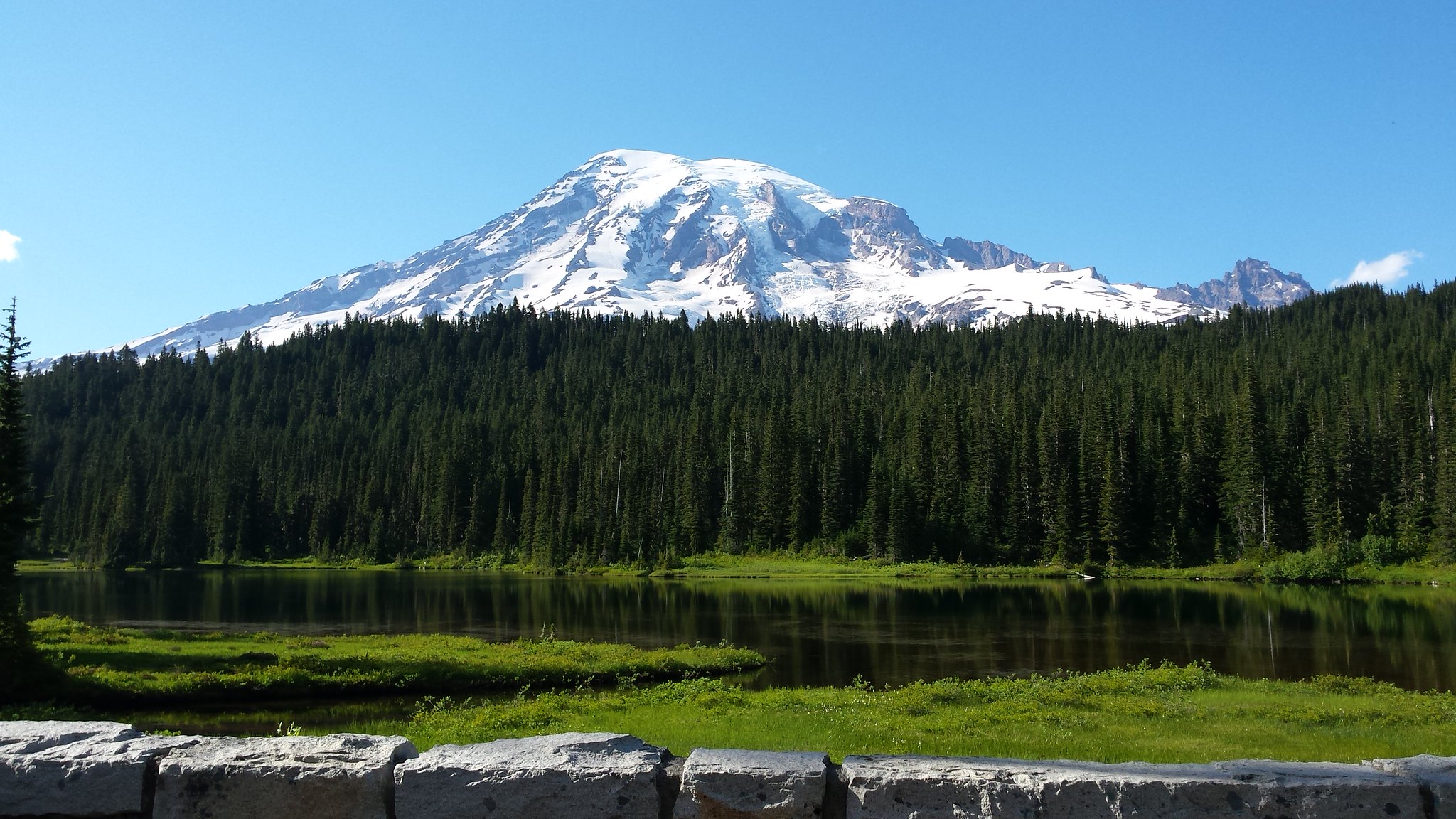
As we've traveled on across to the Pacific Northwest, we took a few short opportunities to explore the regions we were passing through. Using the Christmas money we'd saved from last year, we stopped in at Yellowstone National Park and Mount Rainier to explore the beauty of our world. We have since made our way to Vancouver Island in British Columbia.


Along the way we've met some wonderful people, including Richard Jehn and Stephanie Smith, two amazing people who have worked hard to connect us with people throughout their region that are working on coal issue, but unfortunately missed the opportunity to meet and thank Dena Louise who has been the most instrumental in making our connections from the very beginning. That will come on the return to the states.


We've also received some gracious hospitality from the editors of Dialogue, an informative magazine of independent voices, who gave us a place to stay last night.

Today we are venturing north on Vancouver Island to the Cumberland Museum to take part in the 30th Annual Miner's Memorial Weekend. There we will draw connections between coal mining communities and the need for workers rights and a more viable energy future.

We are inviting folks to please donate once again to our GoFundMe. Unfortunately, it's looking as though we may have to balance things on our credit cards while hoping for the best. So far we are not even a quarter of the way towards our goal, but we decided to throw caution to the wind when we departed on the tour as we know this work is more important than our financial welfare. So please help us out with a donation if you can, or spread the word if you are in a tough financial situation yourself!

Thursday, June 11, 2015

Tongue River Railroad EIS Hearing - Colstrip (Days 10 & 11)

Fearing thunderstorms again, we abandoned our wonderful campsite on the McRae ranch south of Colstrip, Montana for a hotel room in town, (thanks to the gracious help of Mike Scott with the Sierra Club out of Billings).  It was a good opportunity to catch up on social media work, put the finishing touches on the Colstrip Generating Station video, and prepare for the next EIS hearing for the Tongue River Railroad held on Wednesday in Colstrip. 

On the evening of Wednesday June 10th, we once again joined with various people throughout surrounding communities to voice concerns about the railroads impacts and the impacts of the proposed Otter Creek Mine should the rail line be built. Clint McRae's comments were straight on, addressing many issues that would be detrimental to local ranchers which were left out or skimmed over in the Environmental Impact Study, such as damage to water pipes they use to water their cattle, not informing ranchers where side line rails will be included that would double the distance of a culvert and make it difficult for cattle to cross, the lack of addressing the full economic impacts it would have on their ranches, and many others. Several other ranchers, including Clint's father Wallace, spoke to other concerns. Others spoke up for the Amish communities that had difficulties getting to meetings and having access and time to read the draft EIS statements.

Others, including myself, provided testimony to the proposed impacts the mine would have through our own experiences with coal.
 
 Following the initial round of comments, several speakers who were not given enough time to finish their comments were able to do so. I did as well, speaking directly to the panel of officials who came to "hear" the public comments, pleading they take into account the people of the region, the friends and families we'd met, and that none of them should have to suffer the same forms of Benthamite Utilitarianism the people of Appalachia have had to endure. 


Tuesday, June 9, 2015

Tongue River Railroad EIS Hearing (Day 9)


The Tongue River Valley in Montana is a beautiful area, a quiet place where a person can sit outside at night and study the big starry sky at the end of a long hot day. It’s a place where you can find cattle grazing and people living simply, an area that can bring to mind the song “Home on the Range.” But all is not well in the valley these days. The people living there are trying hard to keep a coal company from tearing up their home and a railroad from bisecting their lands.

Yesterday evening, we attended the first of four Environmental Impact Statement hearings concerning a coal railroad that, if it is approved, will run along the Tongue River Valley. It will affect several people, displacing some and intruding on others. The railroad is for a proposed 1.3 billion ton lease coal mine at Otter Creek. In an effort to appease climate change worries, the claim has been made that this will not be a “new” coal mine but will rather displace coal mines currently in operation in Wyoming while creating jobs in the valley. Several aspects were covered in comments made from issues concerning people’s health, the environment, and other topics of importance to the residents with attendees ranging from the very young to family elders, all with something at stake.

One of the first steps in the Environmental Impact Study (EIS) is a cultural lands survey, where people come in and make note of all the cultural and historical areas of land on the purposed routes. It was stated the results of the cultural study had left out a lot of information such as the location of Northern Cheyenne cultural lands which upset many of the people within the tribe. Cultural impacts affecting other communities, such as the Amish, were also overlooked or left out of the report. 
 
Ranchers brought up concerns affecting their cattle ranges as well as other people living in the valley such as who would be responsible for the homes and wells that would be destroyed as well as whose homes and which wells. Local scientists addressed the environmental concerns of the mine and the railroad on the wildlife habitats and their belief that the environmental impact study on wildlife was not given the proper amount of consideration as it should have been. 

Applause followed each speaker in a display of solidarity between Northern Cheyenne, ranchers, and environmentalists alike. It was funny, though, when the single railroad employee in attendance finished his brief statement, only two or three people applauded. I couldn’t figure out if they were just being polite or if they were glad he only spoke for 30 seconds. 

Some of the comments were spoken from the heart while others were informed statements questioning the reliability of the information provided in the preliminary 4000 page, six volume report. Without the railroad, the coal mine will have trouble getting started. Without the coal mine, there is no need for the railroad. It is, once again, the promise of temporary jobs versus the long term impact of a mine and the scars it will leave behind.